- Statutory Equivalency to Section 138: Section 25 of the Payment and Settlement Systems Act (PSSA), 2007 mirrors Section 138 of the Negotiable Instruments Act for electronic auto-debits (NACH/ECS). It is a quasi-criminal statutory mechanism, not an immediate cognizable police offense.
- Mandatory 15-Day Statutory Window: Under Section 25(1)(b), lenders cannot initiate court complaints without first serving a formal 15-day demand notice. An advocate reply served within this window establishes genuine financial hardship and halts unilateral ex-parte motions.
- Zero Police Jurisdiction & No Instant Arrest: Commercial banks and collection agencies possess zero legal authority to involve local police or execute arrests for electronic mandate defaults. All proceedings remain confined to private judicial complaints before a Metropolitan Magistrate.
- Full Compounding & Quashing under Section 25(5): Section 25 offenses are compoundable by law. Executing a One-Time Settlement (OTS) extinguishes the cause of action, compelling the bank to file for formal court dismissal of the complaint.
- SARB Haircuts (40%–65%) & Mandatory NDC: Bypassing third-party recovery agents to negotiate directly with Zonal Stressed Asset Resolution Branches unlocks 40% to 65% principal waivers, 100% penal write-offs, and a mandatory ₹0 No Dues Certificate under RBI rules.
Demystifying the Section 25 PSSA Notice: Why Banks Weaponize Criminal Law
Receiving an official legal notice drafted by a bank's empanelled advocate bearing the bold heading "Notice under Section 25 of the Payment and Settlement Systems Act, 2007" triggers profound panic and psychological distress for most borrowers. The document is intentionally structured with aggressive legal phraseology—citing potential penalties of two years of rigorous imprisonment, heavy punitive fines, and impending non-bailable warrants before Metropolitan Magistrate Courts.
In modern Indian retail banking, physical post-dated paper cheques have been almost entirely replaced by electronic mandates executed through the National Automated Clearing House (NACH) and e-Mandate protocols regulated by the National Payments Corporation of India (NPCI). When an equated monthly installment (EMI) fails to clear on the designated presentation date due to temporary liquidity shortfalls, the lending institution's automated core banking system registers an electronic mandate dishonour.
Rather than treating this failure as a civil commercial delay, lending institutions and aggressive non-banking financial companies (NBFCs) weaponize Section 25 of the PSSA as an instrument of coercive leverage. By framing an involuntary financial default in the ominous language of criminal jurisprudence, recovery departments attempt to induce acute fear, forcing distressed borrowers to liquidate emergency subsistence assets or borrow from predatory private moneylenders. Understanding the actual statutory boundaries of Section 25 is the essential first step toward reclaiming your legal rights and dismantling this institutional intimidation.
Statutory Anatomy of Section 25: Legal Equivalency & Mandatory Procedural Timelines
To mount an effective legal defense, one must examine the precise legislative architecture of the Payment and Settlement Systems Act, 2007 (PSSA). Section 25 was enacted by Parliament to provide electronic fund transfers the exact same legal sanctity and penal consequences as traditional physical negotiable instruments under Section 138 of the Negotiable Instruments Act, 1881.
Under Section 25(1), an offense is deemed committed only when an electronic funds transfer initiated by a person from an account maintained by him with a bank cannot be executed because the amount of money standing to the credit of that account is insufficient to honour the transfer instruction. However, the statute explicitly prescribes strict, mandatory preconditions that the lender must fulfill before any judicial court can take cognizance of the alleged offense:
| Statutory Stage | Prescribed Legal Timeline | Mandatory Legal Requirements | Borrower Strategic Defense Action |
|---|---|---|---|
| Mandate Dishonour | Day 0 (Presentation Date) | Electronic NACH debit bounces due to balance insufficiency. Bank generates dishonour memo. | Document bank account statement and identify wrongful double-presentation or unauthorized penalty debits. |
| Statutory Demand Notice | Within 30 Days of Dishonour | Lender must serve a written demand notice for payment via registered post or speed post. | Verify delivery date, check for defective demand amounts, and calculate the exact 15-day response window. |
| Statutory Cure Window | 15 Calendar Days from Receipt | Borrower is granted 15 days to tender payment or place formal legal defense on record. | Dispatch advocate-drafted reply establishing involuntary distress, disputing usurious penal fees, and proposing OTS. |
| Cause of Action Accrual | Day 16 post-Notice Receipt | If payment is not remitted within 15 days, cause of action arises for filing a criminal complaint. | Maintain formal legal communication trail. Cause of action is suspended during active OTS negotiations. |
| Court Complaint Filing | Within 30 Days from Cause of Action | Lender must file a formal private complaint under Section 25 before a Judicial Magistrate. | Advocate enters appearance, raises preliminary jurisdictional objections, and submits compounding petition. |
If the lending institution fails to dispatch the demand notice within 30 days of receiving the dishonour advice, or if it files the court complaint beyond the statutory 30-day limitation window without seeking explicit condonation of delay, the entire complaint becomes legally defective and is liable to be quashed at the threshold.
The Doctrine of Mens Rea: Why Involuntary Default is Not Criminal Fraud
A cornerstone principle of Indian criminal jurisprudence is that no individual can be convicted of a criminal offense in the absence of mens rea—the deliberate guilty mind or fraudulent intent to cheat. When a borrower faithfully services a personal loan or business credit line for months or years before encountering an unexpected financial catastrophe, their subsequent default is purely involuntary.
The Supreme Court of India and various High Courts have repeatedly ruled that standard debt default arising out of business collapse, sudden employment termination, macro-industry downsizing, or severe medical insolvency constitutes a civil breach of contract governed by the Indian Contract Act, 1872. Lenders cannot arbitrarily convert civil disputes into criminal proceedings simply by invoking Section 25 of the PSSA or Section 138 of the Negotiable Instruments Act to bypass the normal civil court procedures.
Furthermore, Section 25 proceedings are strictly quasi-criminal regulatory mechanisms aimed at restitution rather than punitive incarceration. When a borrower demonstrates through documentary proof that the auto-debit failure was an unavoidable consequence of economic distress—and simultaneously expresses a bona fide desire to settle the principal debt under RBI compromise frameworks—courts actively encourage conciliation rather than prosecution.
Banker's Right of General Lien (Section 171) & Shielding Operational Survival Funds
In conjunction with serving Section 25 notices, lending banks routinely deploy an aggressive banking mechanism known as the Banker's General Lien and Set-Off under Section 171 of the Indian Contract Act, 1872. This statutory right enables a lending institution to unilaterally appropriate balances, freeze access, or sweep incoming funds from any savings account, fixed deposit, or corporate salary account maintained within that exact same banking entity.
For example, if you default on an unsecured personal loan with a scheduled commercial bank while receiving your monthly employment salary or maintaining operating capital in a savings account at the same bank, the core banking system will automatically execute an internal sweep the second funds are credited. This sudden automated freeze can completely paralyze a family's daily subsistence, making it impossible to buy groceries, pay residential rent, or service essential healthcare bills.
However, this right of lien has definitive legal boundaries: a lending bank possesses zero legal power to touch, freeze, or appropriate funds deposited in independent third-party banking institutions where you hold no outstanding liabilities. Consequently, any borrower facing an impending default must immediately take defensive action by establishing a primary operational account with an unrelated scheduled bank, ensuring that vital subsistence funds remain entirely insulated from automated internal sweeps.
Section 25 PSSA Legal Defense & Debt Settlement Architecture
The visual blueprint below details the comprehensive lifecycle of defending against a Section 25 PSSA auto-debit bounce notice—spanning from initial mandate dishonour and 15-day advocate replies to bank Stressed Asset Resolution Branch (SARB) negotiations, court compounding, and final debt extinguishment.
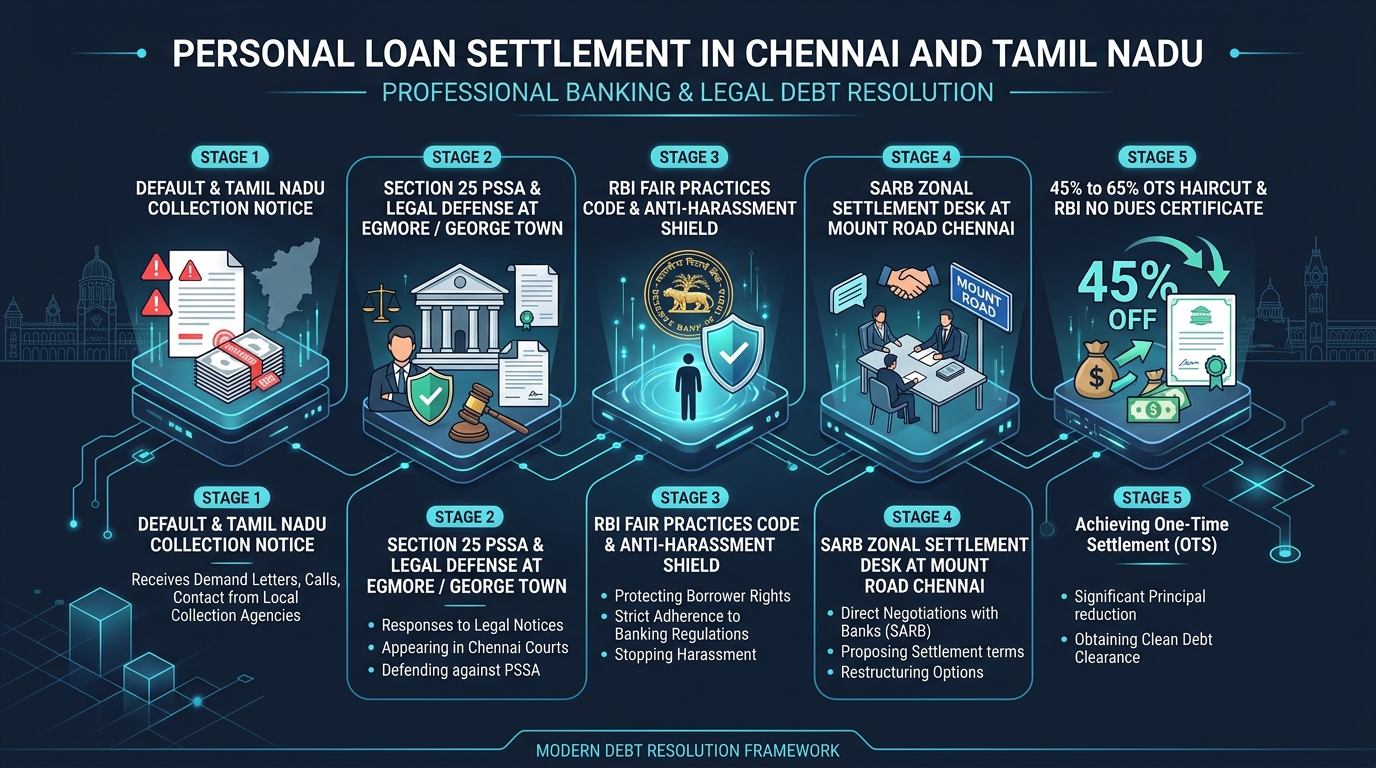
Figure 1.0: End-to-End Section 25 PSSA Statutory Notice Defense, Advocate Reply Protocol & Bank OTS Extinguishment Framework.
OTS Haircut Mechanics: The Net Present Value (NPV) Recovery Benchmark
Many borrowers erroneously believe that banks file Section 25 notices with the sole objective of sending them to trial. In commercial reality, banks are profit-driven corporations governed by strict asset classification and provisioning guidelines issued by the Reserve Bank of India (RBI). Protracted litigation in Magistrate Courts is expensive, cumbersome, and economically inefficient for financial institutions.
When a loan remains unpaid past 90 days, it is classified as a Non-Performing Asset (NPA). Under RBI Prudential Norms on Income Recognition, Asset Classification and Provisioning (IRACP), banks are compelled to set aside substantial capital provisions (from 15% to 100% of the loan amount) from their operational balance sheets. Prosecuting a Section 25 complaint requires retaining empanelled lawyers, paying advocate appearance fees, and enduring 3 to 6 years of court delays with zero guarantee of asset recovery on unsecured debt.
Where C_t represents estimated recoveries, r is the discount rate, and deductions account for 3–5 years of court friction and capital locked in NPA provisions.
When evaluated through this Net Present Value equation, an immediate lump-sum settlement or structured One-Time Settlement (OTS) is far more lucrative for the bank than years of litigation. The bank recovers liquid capital, eliminates legal costs, and immediately writes back its locked provisioning into quarterly profit. Consequently, institutional credit committees routinely approve compromise settlements granting 40% to 65% principal haircuts alongside a 100% complete waiver of all penal interest, overdue charges, and bounce penalties.
The Advocate 15-Day Legal Reply Protocol: Transforming Threat into Settlement
The statutory 15-day window following the receipt of a Section 25 PSSA notice is your most powerful strategic opportunity. Rather than ignoring the notice or responding with emotional pleas, engaging seasoned debt defense counsel to serve a structured legal reply establishes an unassailable record. Here is the five-stage defense protocol executed by our advocates:
Forensic Audit of Notice & Mandate Technicalities
We audit the statutory demand notice against strict PSSA compliance rules. We examine whether the notice was served within the 30-day mandate window, verify the exactness of the demanded sum, identify unnotified penal compounding, and inspect the validity of the electronic NACH presentation mandate.
Establishing Involuntary Distress & Lack of Mens Rea
We assemble an exhaustive financial hardship dossier—incorporating corporate layoff letters, business loss statements, medical diagnosis reports, and bank statements showing exhausted cash reserves—proving that the mandate bounce was purely involuntary and devoid of criminal intent.
Challenging Usurious Penal Charges & RBI Violations
We legally challenge arbitrary late payment penalties, penal interest compounding, and unlawful bounce charges under RBI Circular on Fair Lending Practice - Penal Charges in Loan Accounts (2024), stripping away inflated artificial claims.
Cease-and-Desist Recovery Harassment Injunction
Our reply puts the bank's Principal Nodal Officer and legal department on formal notice under RBI Master Directions on Recovery Agents, barring unauthorized third-party visits, abusive phone calls, and workplace intimidation under threat of regulatory escalation.
Submitting a Formal OTS Compromise Proposal
We channel the matter away from adversarial criminal litigation by submitting an institutional One-Time Settlement offer directly to the bank's Zonal Stressed Asset Resolution Branch (SARB), initiating negotiations for a 40% to 65% principal haircut.
Sanction Letter Forensics, Compounding under Law & Complete Quashing
Once settlement terms are verbally negotiated with bank officers, borrowers must exercise strict forensic diligence before releasing any payment. A critical hazard in loan resolution is remitting settlement funds based on informal emails, WhatsApp messages, or recovery agent verbal commitments. Without an official, digitally signed or stamped OTS Sanction Letter issued on bank letterhead by an authorized Credit Committee member, deposited funds are frequently credited against accumulated penal charges, leaving the loan active and the Section 25 complaint alive.
Our legal team audits every sanction letter to ensure it incorporates five essential covenants: (1) Exact specification of the compromised settlement amount and loan account number; (2) Unambiguous debt extinguishment declaring all balance principal, interest, and charges waived; (3) Explicit obligation for the bank to withdraw all pending Section 25 PSSA, Section 138 NI Act, or civil suits; (4) Mandatory delivery of the ₹0 No Dues Certificate; (5) Reporting of the account as 'Settled' with ₹0 balance across all credit rating bureaus.
Under Section 25(5) of the PSSA, 2007 read with Section 147 of the Negotiable Instruments Act and Section 320 of the Code of Criminal Procedure (CrPC), offenses related to dishonoured payment mandates are fully compoundable. When the settlement amount is remitted directly into the designated loan account via RTGS or NEFT, the bank's advocate files a joint compounding petition or withdrawal application before the trial magistrate, resulting in the absolute dismissal and quashing of the complaint.
Under RBI Circular RBI/2023-24/60, lenders are statutorily required to deliver the formal No Dues Certificate (NDC) within 30 calendar days of receiving full settlement remittance. Any unjustified failure to deliver the NDC within this timeline entitles the borrower to mandatory statutory compensation of ₹5,000 per day of delay payable directly by the lending institution.
Comparative Analysis: Defending Section 25 vs Alternative Pathways
Evaluating the available resolution strategies enables borrowers facing Section 25 PSSA notices to make an informed, economically sound decision:
| Resolution Strategy | Principal Haircut Range | Legal Exposure to Criminal Court | CIBIL Credit Bureau Status | Average Time to Closure |
|---|---|---|---|---|
| Advocate-Led OTS (Direct SARB) | 40% – 65% Principal Haircut | Zero (Full Compounding & Quashing) | 'Settled' with ₹0 Balance | 3 to 6 Weeks |
| National Lok Adalat Settlement | 45% – 65% Principal Haircut | Zero (Binding Non-Appealable Decree) | 'Settled' with ₹0 Balance | Quarterly Lok Adalat Cycles |
| Contested Court Litigation | Uncertain (Discretionary Relief) | Active (Multiple Hearing Appearances) | 'Suit Filed' / Compounding Overdue | 3 to 5 Years |
| Loan Restructuring / Rescheduling | 0% Haircut (Tenure Extended) | Zero (Mandate Re-registered) | 'Restructured' / Active Debt | 2 to 4 Weeks |
Comprehensive Legal Defense & Debt Resolution by SettleLoans
Facing a Section 25 PSSA notice requires aggressive legal representation to prevent ex-parte magistrate proceedings, insulate your workplace and family from unauthorized recovery agents, and negotiate directly with bank credit committees for maximum debt waivers. SettleLoans delivers end-to-end statutory defense and institutional debt resolution across India.

Settle Loan is India's trusted debt relief and loan settlement platform. We help borrowers overcome financial distress by negotiating with banks and NBFCs to legally settle personal loans and credit card debts. With our transparent, performance-based approach, you can achieve debt freedom and regain your financial peace of mind.
Media Mentions
COMPUTER
Frequently Asked Questions on Section 25 PSSA Notices & Loan Default
What is a Section 25 PSSA notice for loan default?
A Section 25 notice under the Payment and Settlement Systems Act, 2007 is a statutory demand notice issued by a lending bank or NBFC when an electronic auto-debit mandate (such as NACH or e-Mandate) bounces due to insufficient account balance. It grants the borrower a mandatory 15-day window from receipt to pay the demanded amount before the lender gains the legal right to file a private criminal complaint in a Metropolitan Magistrate Court.
Is Section 25 of the PSSA equivalent to Section 138 of the Negotiable Instruments Act?
Yes. Section 25 of the PSSA, 2007 was enacted specifically to give electronic funds transfer debits (NACH/ECS) the exact same statutory standing and penal framework as physical paper cheque bounces under Section 138 of the Negotiable Instruments Act, 1881. The procedures, 15-day notice requirements, compounding provisions, and defenses are substantially identical.
Can I be immediately arrested if my NACH auto-debit EMI bounces?
No. An electronic EMI bounce is not a cognizable offense. Police cannot register an FIR, visit your home, or arrest you upon an auto-debit bounce. The lender must first serve a 15-day statutory notice, wait for the timeline to expire, and then file a formal private criminal complaint before a judicial magistrate. Even if a complaint is filed, the court initially issues a summons for appearance, followed by bailable processes if unattended. Immediate arrest is legally impossible.
What is the mandatory timeline to respond to a Section 25 PSSA legal notice?
Under Section 25(1)(b) of the PSSA, the borrower has strictly 15 calendar days from the date of physical or electronic delivery of the notice to respond. Serving a formal legal reply drafted by an advocate within this 15-day window places your bona fide defense on record, disputes illegal penal levies, and prevents the bank from proceeding ex-parte.
How does an advocate's legal reply dismantle a Section 25 PSSA complaint?
An advocate's reply demonstrates the complete absence of mens rea (fraudulent intent) by providing documented proof of involuntary financial distress (such as job loss, medical catastrophe, or business failure). It also audits the demand notice to challenge inflated penal interest, unnotified bouncing charges, and defective service, while simultaneously offering a structured compromise settlement under RBI frameworks.
Can a Section 25 PSSA criminal complaint be withdrawn or compounded upon settlement?
Yes. Under Section 25(5) of the PSSA, 2007 read with Section 147 of the Negotiable Instruments Act and Section 320 of the Code of Criminal Procedure (CrPC), offenses relating to bounced electronic debits are fully compoundable. Once a One-Time Settlement (OTS) is concluded and the agreed compromised amount is remitted, the bank is legally obligated to file an application for complete withdrawal and closure of all court proceedings.
What percentage of debt waiver can be negotiated on a defaulted loan facing Section 25 notices?
Borrowers negotiating directly with the bank's Zonal Stressed Asset Resolution Branch (SARB) or Credit Committees routinely achieve 40% to 65% principal waivers, alongside a 100% complete waiver of accumulated penal interest, overdue charges, and mandate bounce fees. The exact waiver depends on asset provisioning aging and documented financial insolvency.
Can the lending bank freeze my other bank accounts under Section 171 Banker's Lien?
Under Section 171 of the Indian Contract Act, 1872, a bank has the right of general lien only over accounts maintained within that exact same banking institution under the same Customer ID or PAN. A lending bank cannot freeze, debit, or attach funds in independent third-party banks without an explicit decree or attachment warrant from a competent civil court.
What happens if I completely ignore a Section 25 PSSA notice and subsequent court summons?
Ignoring the 15-day notice allows the bank to file a private complaint in the Metropolitan Magistrate Court. If you subsequently ignore the court's physical summons, the magistrate may issue a bailable warrant, followed by a non-bailable warrant (NBW) solely to compel your physical appearance in court. It is critical to engage legal counsel to enter an appearance and file for compounding.
How quickly must a bank issue a No Dues Certificate (NDC) after settlement?
Under RBI Circular RBI/2023-24/60, all regulated commercial banks and NBFCs are legally mandated to release the official zero-balance No Dues Certificate (NDC) and update credit rating bureaus within 30 calendar days of receiving full settlement remittance. Unjustified delays attract mandatory statutory compensation of ₹5,000 per day payable to the borrower.